Key takeaways
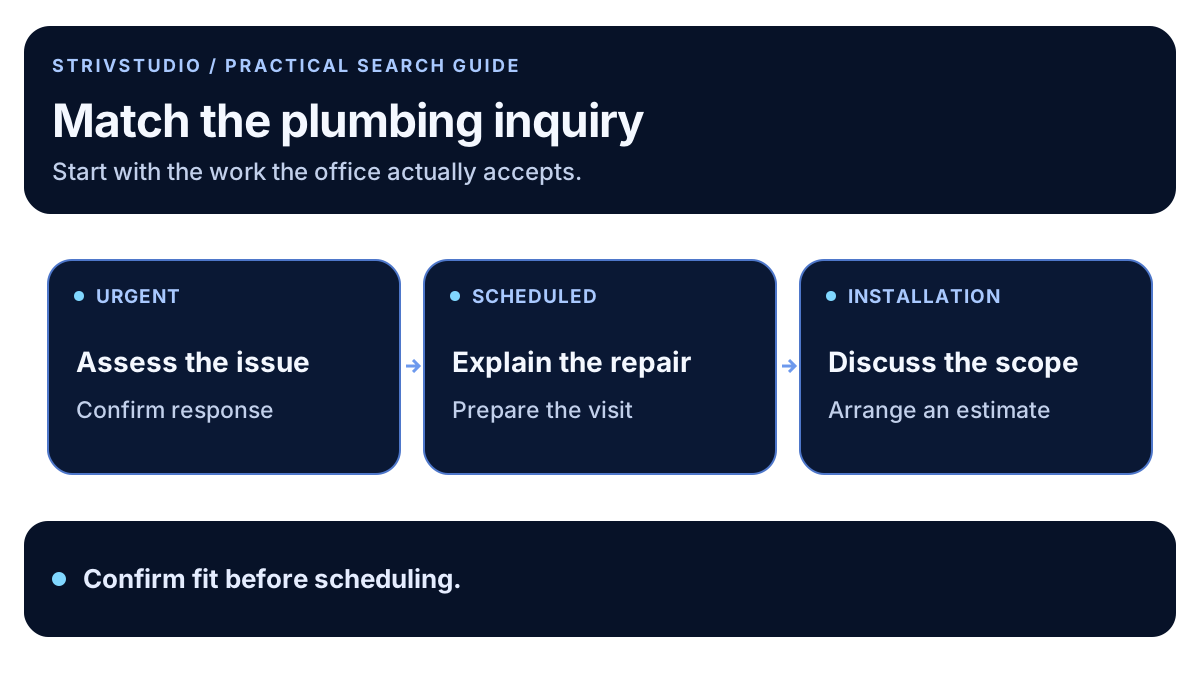
- Separate urgent assessment, scheduled repair and installation estimate decisions.
- Confirm actual equipment, property types, service areas and office response.
- Publish practical preparation guides backed by approved team information.
- Review qualified inquiries and accepted jobs alongside search observations.
Plumbing SEO should connect the jobs your business accepts with clear service pages and an office process that can handle the resulting inquiries. Separate urgent problems, scheduled repairs and installation estimates. Explain real coverage and availability, then measure whether the calls fit the business instead of judging success by traffic alone.
A general plumbing page may introduce the company, but it cannot answer every hiring decision well. Our plumbing SEO service starts with the offer and inquiry path. The practical plan below helps an owner decide which pages to improve before extending a blog calendar.
Which plumbing jobs should the plan support?
Ask the dispatcher or person answering calls to list accepted services, property types and recurring mismatches. Does the company handle drain clearing, fixture replacement, water-heater work or commercial accounts? Which requests require an assessment before the office can discuss scope? Confirm these facts rather than assuming that every plumber offers every category.
Make a worksheet with job type, customer question, current page, accepted area and information needed at first contact. For an illustrative residential company, a landlord requesting ongoing commercial maintenance might be a poor fit even though the search contains “plumber.” The website should help that customer recognize the boundary before submitting a request.
Keep a second list of jobs the company wants to grow. This gives the content plan a business purpose without inventing search-volume numbers or claiming that the largest keyword is automatically the best opportunity. When the initial request does not establish fit, document what the office needs to confirm before scheduling.
How should plumbing service pages differ?
| Inquiry | Useful page information | Office confirmation |
|---|---|---|
| Urgent assessment | Actual contact process and service limitations | Who responds and when dispatch is available |
| Scheduled repair | Supported job types and appointment preparation | Property, access and description of the issue |
| Installation estimate | Assessment, proposal and scheduling steps | Equipment and scope questions requiring review |
Do not diagnose a leak from a keyword or turn a marketing page into instructions for unsafe repair work. Explain what the service assessment establishes and what remains unknown until the team reviews the property. If pricing depends on scope, describe the information needed rather than publishing an invented universal price.
Availability language needs the same care. Explain whether the phone is answered, messages are returned or crews are dispatched outside normal hours. These are different promises. Check them with the person who actually manages the schedule.
How should location and profile details be handled?
Use the same approved business identity and contact information across the website and owned profiles. Google's business representation guidelines call for accurate real-world naming and details. Adding town and service phrases to the company name is not a substitute for useful service content.
Explain the real accepted area in a coverage hub. Add dedicated town pages when approved local work or a meaningful operating distinction gives the reader something useful. Do not imply a branch office in every town. Our service-area guide helps choose between a local destination and a regional explanation.
Google's local ranking guidance includes relevance, distance and prominence. Website work can improve the explanation of the business; it does not relocate the crew or guarantee a Maps position for each searcher.
Which articles should a plumbing company publish?
Start with questions the office answers repeatedly before a suitable appointment. A guide can explain what information to prepare for a water-heater estimate, how the company's drain-service assessment works or what a fixture-replacement proposal should clarify. Keep manufacturer requirements and the company's process distinct.
For example, an original appointment checklist could ask for the property type, a brief issue description, access considerations and the customer's preferred contact method. Have the team approve each requested detail. Do not make customers perform technical checks that the business has not reviewed.
Use approved, anonymized examples to explain scope differences. Label hypothetical scenarios as examples and retain permission for customer photos. Our contractor photo guide covers a practical evidence workflow, while the content planning guide turns office notes into a reviewable brief.
How do you connect guides to the right service?
Link a preparation article to the exact service it explains. The service page can link back when the guide answers a common estimate question. Google's link guidance recommends ordinary crawlable links and descriptive anchor text. A reader should understand the destination before following it.
Check the journey on a phone: find the service, confirm coverage, understand the next step and reach the office. Keep the call label and form language accurate. A prominent contact button cannot compensate for a page that attracts a service the company does not offer.
What should the review report show?
Group inquiries by service, area and qualification. Record appointments and outcomes in the approved office system, leaving unknown sources unknown. Note capacity changes and seasonal demand beside search observations so a busier week is not automatically credited to a new page.
Use our measurement framework to keep discovery, contact actions and confirmed work separate. If the wrong calls increase, clarify the scope before publishing more. STRIVSTUDIO's plumbing SEO service can turn those findings into a prioritized page and content plan.