Key takeaways
- Send the QR code to a page built for the card, not to your homepage.
- Repeat the card's offer, services and area above the quote form.
- Tag every response channel so replies can be counted by campaign.
- Scan, call and submit a test request before the cards are mailed.
In this article
- 1Why the homepage is the wrong destination
- 2What a postcard landing page needs
- 3QR codes, short web addresses and UTM tags
- 4Phone calls and call tracking numbers
- 5Sending requests to your CRM with the campaign attached
- 6Should the page be in Google?
- 7Test every reply path before the cards are mailed
- 8Who builds what in a MoverLead campaign
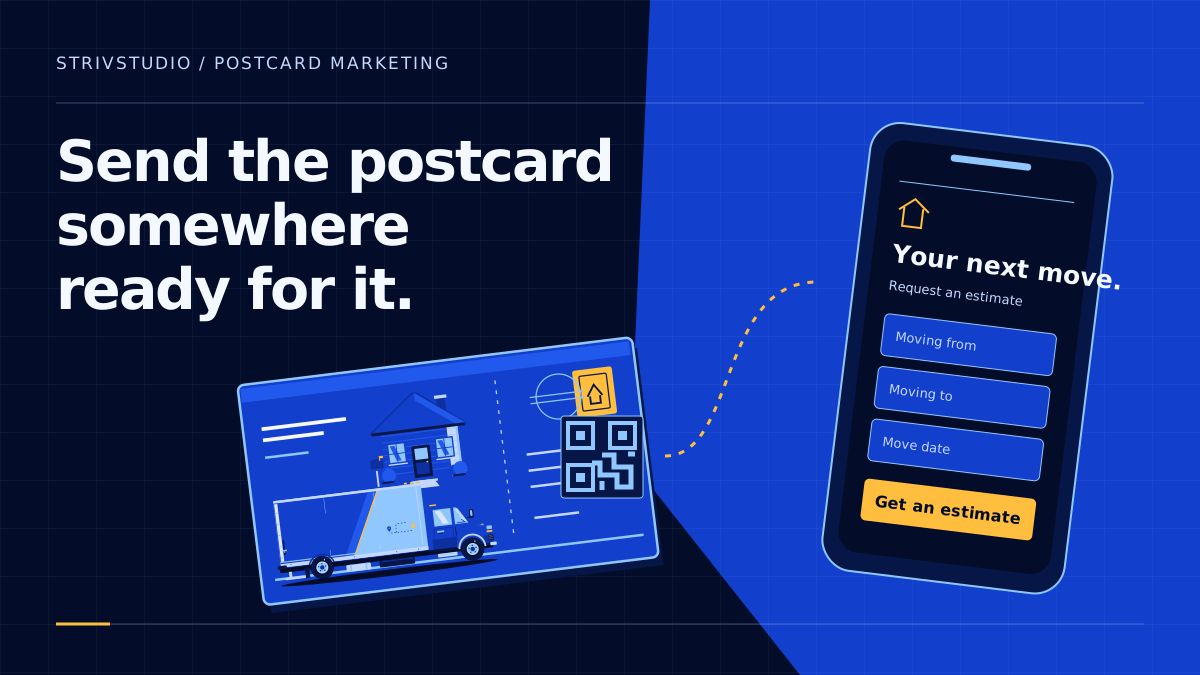
A moving company postcard landing page is the page a postcard's QR code or printed web address opens. It should repeat the card's offer, name the services and area the card mentioned, give one short way to request an estimate and keep the phone number one tap away. Every reply it collects should carry the campaign's name, so you can tell what the mailing produced.
The page is the half of a postcard campaign that lives on your own website. MoverLead's postcard marketing covers the audience, the custom design, the printing and the mailing. What happens after someone picks the card up and scans it is decided by your website.
Why the homepage is the wrong destination
Your homepage is written for everyone: people who found you on Google, past customers, job applicants and commercial clients. Someone who scanned a postcard arrives with one thing in mind, the offer on the card. If the homepage does not mention it, they have to hunt for it, and on a phone, many will not.
A campaign page removes that work. It opens with the same headline as the card, uses the same colors and photos, and puts the request form where a thumb can reach it. The visitor can tell right away that they are in the right place, which is the whole job of the first screen.
What a postcard landing page needs
- The card's headline and offer. Use the same words. If the card offers free boxes with a local move, the page says so above the form, with the same limits and expiry date.
- The services and area. Name the move types the card promoted and the towns or counties you serve, so a household outside your area knows before it asks.
- One quote form. Ask only what your office needs to call back: name, phone, move date, moving from and moving to. Inventory and access questions can wait for the estimate.
- A click to call button. Many people would rather call. Keep the number visible at the top and repeat it near the form.
- Proof you can back up. Real photos of your trucks and crew, review excerpts with a source a customer can check, and your USDOT number if you run interstate moves.
- Speed on a phone. The card is read at home, and the scan happens on a phone. A page that takes several seconds to load loses people before they see the form.
Leave out the main menu, the blog and anything else that pulls the visitor away from the request. A link back to the full website in the footer is enough for people who want to read more. Our moving company website checklist covers the rest of the site.
QR codes, short web addresses and UTM tags
A QR code should open the landing page with UTM parameters attached. UTM parameters are short tags at the end of a web address, such as utm_source=postcard and utm_medium=direct-mail, that tell your analytics where a visit came from. Add a utm_campaign value for each mailing, so a spring campaign and a fall campaign can be told apart.
Some people will type the address instead of scanning. Print a short address, such as your domain followed by a one word path, and redirect it to the tagged page. Without that redirect, typed visits look like direct traffic and the campaign gets no credit for them.
Print the code large enough to scan from arm's length, with clear space around it, and test the proof with two or three different phones before approving it. A code that points to a page you later move or delete becomes a dead end that you cannot recall from the mailboxes, so keep the address live for as long as cards might be sitting on counters.
Phone calls and call tracking numbers
A call tracking number is a separate phone number that forwards to your office and records that the call came through it. Printing one on the postcard lets you count calls from the mailing, which matters because some people would rather call than fill in a form.
Use the tracking number only on the card and on the campaign page. Keep your main number on your website and your Google Business Profile, because consistent business details across your site and listings help Google connect them to one business. Our moving company SEO services keep those details consistent.
Sending requests to your CRM with the campaign attached
Each form request should arrive with the campaign name in it, through a hidden field filled from the UTM tags. That way the request in your inbox or CRM already says it came from the postcard, and nobody has to remember to ask. When the move books, the source is still attached to the job.
Ask your office to record how callers heard about you as well. Some people will see the card and then search your name on Google, so a strict count of scans and tracked calls will always miss part of the effect. MoverLead's CRM attribution compares the mailing list with the inquiries, estimates and bookings in your CRM, which catches some of the replies that came in another way. Our guide to moving company quote follow-up covers what the office does once a request lands.
Should the page be in Google?
Most postcard landing pages should carry a noindex tag, which asks search engines to leave the page out of their results. The page repeats your service information with a time-limited offer attached, and the people who need it arrive from the card. Keeping it out of search avoids a thin near-copy of your real service pages competing with them.
The exception is a card that promotes a service you also want to rank for. In that case, send the card to the real service page, make sure the offer is visible there, and keep the UTM tags so the visits are still counted.
Test every reply path before the cards are mailed
- Scan the QR code on the printed proof with more than one phone.
- Type the short address and confirm it lands on the tagged page.
- Call the number on the card during and after business hours.
- Submit a test request and confirm the right person receives it with the campaign name attached.
- Mark or delete the test record so it is not counted as a result.
MoverLead's postcard campaign planning checklist lists the same checks from the mailing side, along with the audience, artwork and budget decisions to make before approving an order.
Who builds what in a MoverLead campaign
When a mover runs postcards with MoverLead and a website with StrivStudio, the work splits cleanly. MoverLead chooses the households with you, designs and mails the card and reports on the mailing. We build the landing page, connect the QR code, tracking number and form to your office and CRM, and test the full path before the order is approved. The StrivStudio x MoverLead partnership page shows the whole route, and our postcard marketing for moving companies page explains how a campaign starts.