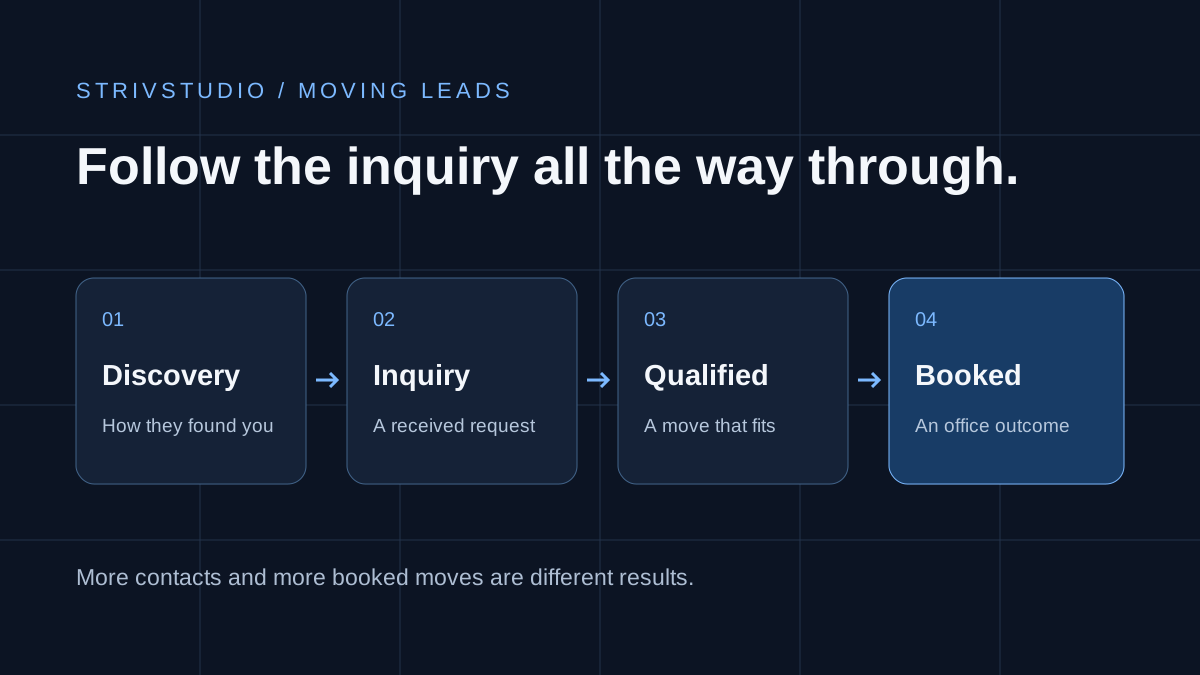
To get more useful moving leads, make it easy for the right customer to find you, understand your service and reach someone who can respond. Local search, paid ads and referrals can all play a role. Choose the next channel from your current bottleneck rather than assuming every mover needs more advertising.
If your office is already missing suitable calls, start there. If requests are consistently for jobs you cannot accept, review targeting and coverage. If customers rarely discover you at all, work on search visibility and referral sources.
Define the inquiry you want
Write down the services, pickup areas, destinations and dates the business can consider. Agree on what makes a request qualified. For example: a reachable customer, asking for an offered service, with locations you cover and a date the office can discuss.
That definition prevents two common reporting problems. A valid contact outside your territory should not count as the same result as a suitable move. A call button click should not count as a conversation. Keep raw contacts, qualified inquiries, estimates and bookings as separate steps.
Choose the lead source that fits the problem
Local SEO and Google Business Profile
Use this when customers need to discover your services in the areas you cover. Start with accurate profile information and useful service pages. Add approved work examples and ask completed customers for honest feedback. Google's local ranking guidance describes relevance, distance and prominence; a profile update cannot erase geographic competition.
Our local SEO starting plan gives the order of work. Search improvements need time to be crawled and evaluated, so record the starting position and keep the dates with each comparison.
Google Search Ads
Use paid search when you have a relevant landing page, an approved budget and an office that can handle the requests. Keep materially different services organized, review search terms and check actual pickup and destination details. Our PPC management for movers covers how we scope this work.
Compare spend with qualified requests and booked moves. Google's qualified-lead and converted-lead goals can represent later outcomes when the connection to your lead process is configured and verified. Do not treat an unverified tracking event as a booking.
Referrals and existing relationships
Make it easy for past customers and real business contacts to refer a suitable move. Give property managers, storage businesses or other contacts you already work with a clear service summary and a dependable way to reach the office. Ask what their customers need before proposing a referral arrangement.
Record the referring source with the inquiry. A referral may cost little in ad spend while still requiring time, follow-up and any agreed commercial terms. Include those costs when comparing it with paid channels.
Purchased moving leads
Review the provider's terms before judging a package by the advertised contact price. Ask how the inquiry was collected, what the customer agreed to, how many businesses receive it, which areas and services qualify, and how duplicates or unsuitable requests are handled.
"Exclusive" needs a written definition. It does not automatically mean the customer is ready to book or has contacted no other mover. Test a limited, approved scope and record your own outcomes before buying more.
Give the visitor enough information to contact you
A customer should not have to call just to learn whether you cover the service. Show the move types, service area, approved company proof and estimate process. Keep the call and request options usable on a phone.
Ask only for information needed at this stage, but collect enough for a useful response. The office may need a move date, two locations, move size and contact details before it can assess the request. Explain whether the next step is a callback, survey or estimate review.
Our moving company website design service connects those decisions to the page and lead destination. The website checklist is a useful starting point if you are reviewing the site yourself.
Compare cost per booked move, not just contact price
For each source, record total acquisition spend, received inquiries, qualified inquiries and booked moves. Total acquisition spend should include the source's advertising or lead fees plus attributable management and tracking costs. Divide that spend by qualified inquiries for cost per qualified lead, and by booked moves for cost per booking. If the denominator is zero, report that clearly instead of inventing a rate.
Here is a hypothetical example using counts only. Source A sends 20 requests, of which 10 qualify and 4 book. Source B sends 40 requests, of which 8 qualify and 2 book. Source B has more contacts; Source A has more bookings. You still need their costs and the value of the booked jobs to decide which is better for the business.
Use the same time window and allow for the delay between inquiry and booking. Deduplicate repeated contacts about the same move. Keep unknown sources labeled unknown rather than assigning credit to the channel you hope is working.
Choose one repair or test
- Few relevant visits: check indexing, service-page relevance and the local search plan.
- Visits but few requests: review coverage, proof and the mobile estimate path.
- Many unsuitable requests: review the source, campaign terms and advertised services.
- Suitable requests but few conversations: fix notifications, ownership and office response.
- Conversations but few bookings: review availability, estimates and follow-up with the team.
Agree on the change, the owner and the next review date. Use the quote follow-up guide when the problem is after the inquiry. For help choosing between website, SEO and paid-search work, start with our moving company marketing services.