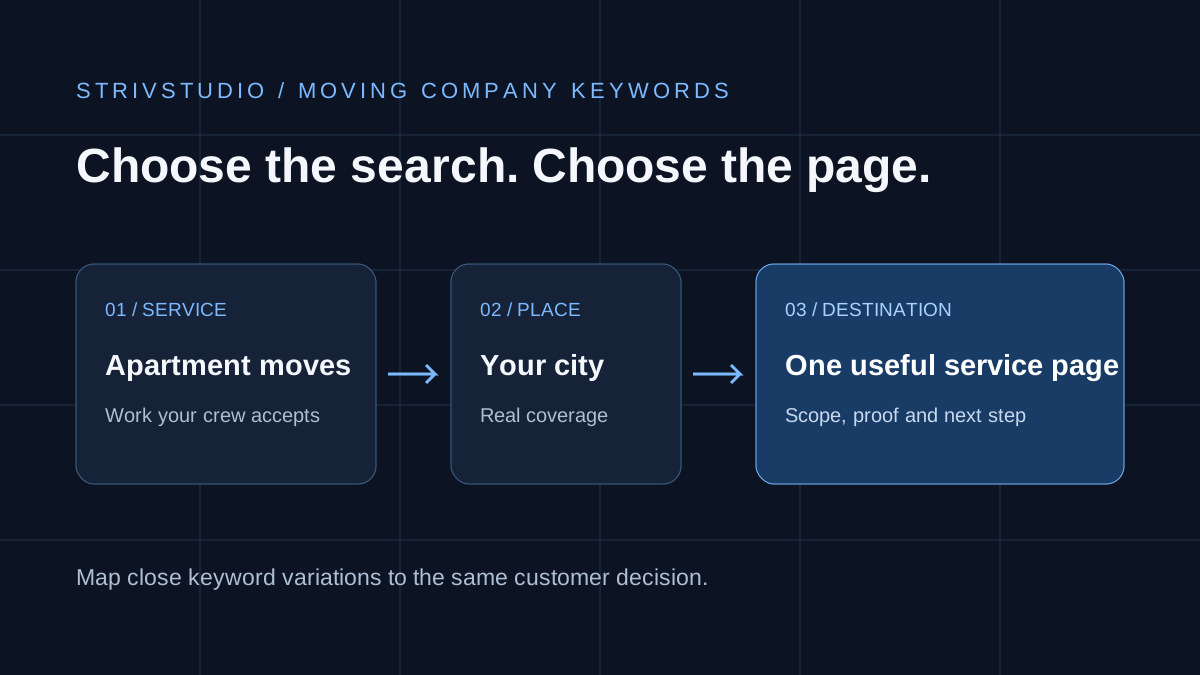
The best moving company keywords describe work your team can accept. Start with a service and a location, check what the searcher expects, and choose the page that can answer the request. A large national search-volume number is less useful than a smaller local term that fits your crews and coverage.
The examples below are planning prompts, not a ranked list of the highest-volume searches. Replace the location placeholders with your real market and remove services you do not offer. Download the keyword planning worksheet (CSV) to keep the decisions in one place.
Moving company keyword examples by service
- Local household moves: local movers [city], moving company [city], residential movers [city], movers near me.
- Apartments: apartment movers [city], small apartment moving company, studio apartment movers [city].
- Labor-only: moving labor [city], loading and unloading help [city], movers to load a rental truck.
- Packing: packing services [city], packers for moving [city], unpacking services [city].
- Office relocation: office movers [city], commercial moving company [city], business relocation services [city].
- Long-distance work: long distance movers [origin], movers from [origin] to [destination]. Use route phrases only when that work is offered.
- Specialty work: piano movers [city], senior moving services [city], furniture moving [city]. Keep only services your team is equipped to provide.
- Customer questions: how do moving estimates work, how early should I book movers, what do movers need to know before an estimate.
That final group belongs in guides or service-page answers. Someone asking how an estimate works needs an explanation before a sales pitch. Someone searching for office movers needs coverage, scope and a way to discuss the job.
Choose one destination for each decision
Use one strong local-moving page for close variants such as "local movers [city]" and "local moving company [city]." Splitting those phrases into separate pages can leave the site repeating itself. A packing service may deserve its own page because the customer needs different scope, preparation and estimate information.
Give a location its own page when you have useful information for that location. Real service coverage, approved local work and questions your office hears can support it. Swapping city names in the same text is not enough. Google's doorway abuse guidance explains the risk of pages made for similar searches that funnel people to the same destination.
For example, an apartment-moving page might explain elevator scheduling, the details you need about stairs and when a customer should check building access requirements. Do not invent a local parking rule to make the page appear specific. Ask the customer or relevant authority to confirm it.
Check demand and the results behind the phrase
Set the location before reviewing estimates in Google Keyword Planner. Record the market and date with the result. National estimates can hide local differences, and similar phrases may share or overlap estimates. Do not add every variation together and call the sum your available audience.
Then inspect the search results. Are people being shown moving companies, job listings, truck rentals or advice? A phrase can look relevant in a spreadsheet while describing a service you do not sell. "Moving jobs" is a particularly risky starting term if you want customers rather than applicants.
Use Search Console to find the queries and pages already earning impressions. An existing page with relevant exposure may deserve improvement before you write a new one. Check whether the page is indexed, whether its answer matches the search and whether the next step is clear.
Fill out a keyword plan the office can use
The worksheet includes service, market, intent, target URL, source, research date and a reason to prioritize the term. Leave volume blank until you have a dated source. Each row should explain what the business will do, not just what a tool found.
- Confirm service fit. Can the company accept the job described?
- Confirm coverage. Are the pickup and destination practical for the team?
- Choose the page. Improve an existing URL if it already answers the same decision.
- Collect proof. Ask for approved photographs, service details and relevant customer questions.
- Set a review measure. Watch relevant clicks and qualified requests, then check what the office booked.
A useful first batch is the service work you want more often, supported by facts you can publish now. Save speculative services and cities for a later review. The local SEO guide for movers explains how that page work connects to Business Profile and reviews.
Keep Google Ads exclusions separate
An SEO keyword plan is not a campaign upload. Paid search also needs match types, location settings, budgets and reviewed exclusions. Searches about employment, rentals or free supplies may be unsuitable, but the exact exclusion depends on your business.
A company selling packing supplies should not blindly exclude every search containing "boxes." Google's negative keyword documentation explains how exclusion matching works. Review the actual terms and the resulting inquiries before broadening a negative list.
Use our Google Ads preparation guide for that separate decision. If you want help researching and implementing the organic plan, see our moving company SEO services.