Key takeaways
- Postcards can reach a household before it searches; search ads cannot.
- A listing-based list is more targeted than mailing every address on a route.
- One offer, one area and one next step make a card easier to act on.
- Judge the campaign by booked moves, not by postcards delivered.
Postcards can work for moving companies when three things are true: the card reaches households that are likely to move, it arrives before they have chosen a mover, and the replies land on a phone line and website that are ready for them. They tend to disappoint when the list is broad, the card tries to sell every service, or nobody tracks what comes back.
That makes postcards different from most moving company marketing. Search ads, SEO and directory listings wait for a customer to start looking. A postcard goes out first and reaches the household earlier in the move.
Why timing does most of the work
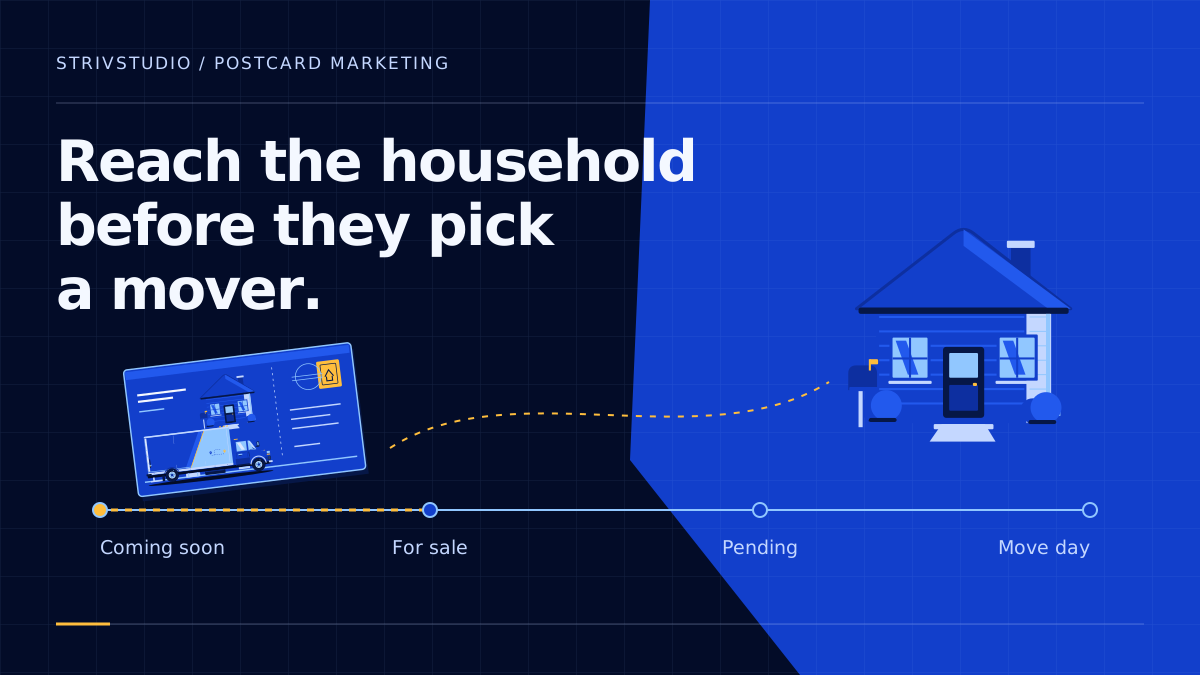
A home listing moves through stages. Coming soon means the owner has decided to sell and the listing is not live yet. For sale means it is on the market. Pending means an offer has been accepted and the sale is working toward closing. Each stage suggests a move may be coming, and none of them confirms a date.
A postcard that arrives at one of those stages can reach the household before it has asked any mover for a quote. When they do start looking, your company is a name they have already seen. MoverLead's moving leads are built on this idea: you choose counties, then review homes by listing stage, property details and listing photos before choosing who receives a card.
Fresh data matters for the same reason. A home that sold and closed weeks ago may already have a mover booked. MoverLead's guide on why fresh property data matters for moving company leads covers how listing changes affect a list.
Targeted lists compared with saturation mail
Every Door Direct Mail is a USPS service that delivers a piece to every address on a carrier route. It is simple to buy, but most of those households are not planning a move. A listing-based list does the opposite: it starts from homes whose sale suggests a move, inside the area your crews can reach.
Keep two limits in mind. A listed home is a reason to introduce yourself, not a request for a quote, and the household is free to hire anyone. The prospects are also not exclusive, so another mover may reach the same address. MoverLead says this plainly on its own pages, and it is the right way to set expectations with your team. Its guide to evaluating moving leads walks through what to check before you commit a budget.
What makes a mover's postcard get a reply
- One offer. Pick the move type you want more of and lead with it. A local mover might lead with full-service local moves and packing. An interstate carrier might lead with long-distance moves.
- Your area, named. Say which towns or counties you serve, so the household can tell at a glance that you cover them.
- Proof that is yours. Real photos of your trucks and crew, your company name exactly as it appears on Google, and any license number your moves require.
- One clear next step. A phone number large enough to read across a kitchen and a QR code that opens a page built for the card.
- Terms in plain sight. If the card makes an offer, print its limits and expiry date where people will read them.
Design support is part of what MoverLead's postcard marketing includes, at no charge for the design itself, with printing and postage quoted separately. The page the QR code opens is the part you or your web team build. Our guide to moving company postcard landing pages covers what that page needs.
How to tell whether postcards worked
Count each stage on its own: postcards mailed, postcards delivered, inquiries, estimates and booked moves. A delivered postcard is not a booked move, and a booked amount is not profit after labor, trucks and the cost of the campaign.
Before the mail goes out, decide the reporting window, how replies will be tagged and who records the source of each call. Tag the QR code with UTM parameters, consider a call tracking number printed only on the card, and make sure the quote form passes the campaign name to your CRM. MoverLead's campaign reports show what was mailed and delivered, and its CRM attribution compares the mailing with the inquiries and bookings your office recorded. Its guide to measuring a moving company postcard campaign explains how to read those numbers without mistaking booked value for profit.
Expect some replies to arrive by other routes. A household may keep your card, search your name on Google weeks later and call from your Google Business Profile. That is one reason the website and profile need to be in good shape before you mail.
When postcards are the wrong next step
Hold off on a mailing if any of these are true:
- Your website does not work well on a phone or has no quote form that reaches the office.
- Calls go to voicemail during the hours people are most likely to read their mail.
- You cannot say clearly which towns you serve and which moves you want.
- Nobody will record where inquiries came from, so the campaign cannot be judged.
Fix those first. Each fix also helps every other channel you use. Our moving company website design service and the guide on how to get moving leads that fit your business are good places to start.
Running postcards with MoverLead and StrivStudio
StrivStudio works with MoverLead on postcard campaigns for moving companies. MoverLead finds the households, designs the card and handles printing and mailing. We build the website and landing page the card points to and connect every reply to your office. The StrivStudio x MoverLead page shows how the two sides fit, and our postcard marketing for moving companies page explains how to start. To hear how other movers describe their campaigns, MoverLead keeps customer stories on video.